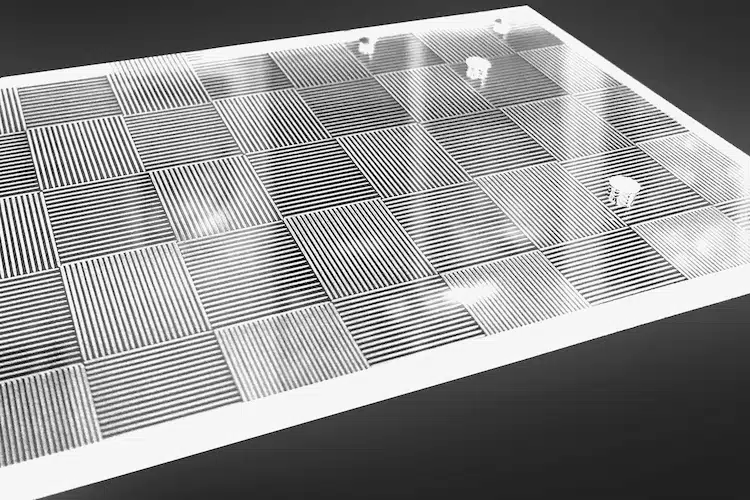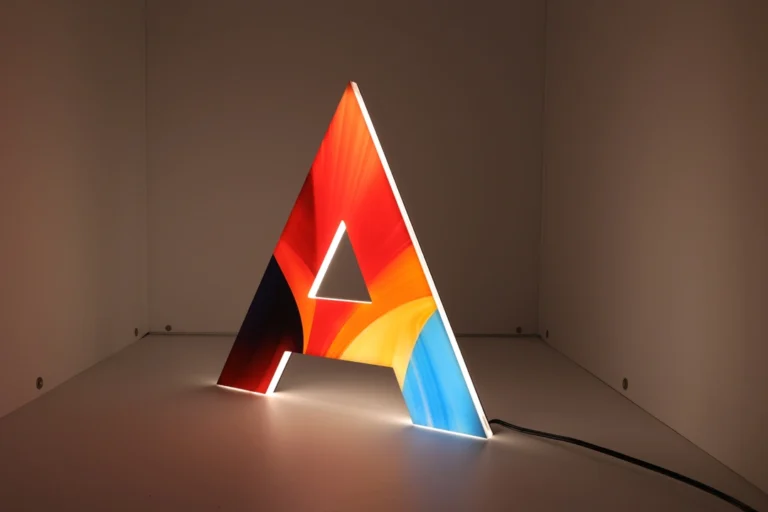
A light guide plate, commonly abbreviated as LGP, is a transparent optical component designed to distribute light across a flat surface.
Instead of placing LEDs directly behind every illuminated area, an edge-lit system introduces light through one or more sides of the plate. The light travels inside the plate and is gradually redirected outward by a designed pattern of dots, grooves, or microstructures.
The result is a thin, evenly illuminated panel that can be integrated into display fixtures, signs, light boxes, equipment, appliances, and decorative lighting structures.
Quick Answer
A light guide plate does not generate light by itself. It receives light from LEDs positioned along its edge and guides that light through the plate by total internal reflection.
Optical dots, engraved lines, grooves, or other extraction structures interrupt this internal reflection at controlled positions. This redirects part of the light out through the front surface.
The distribution, size, shape, and density of these optical structures are designed to compensate for changes in light intensity across the plate, helping the finished panel achieve more uniform illumination.
What Is a Light Guide Plate?
A light guide plate is usually a flat, transparent optical plate made from a material such as optical-grade PMMA.
Its main function is to transform a point or linear light source—typically an LED strip or LED array—into a larger illuminated surface.
A standard transparent acrylic sheet can transmit light, but it does not automatically produce controlled and uniform surface illumination. A functional light guide plate requires an optical extraction pattern designed according to factors such as:
- Plate dimensions
- Plate thickness
- LED position and spacing
- Number of illuminated edges
- Target brightness
- Required uniformity
- Light-emitting direction
- Reflector and diffuser structure
This optical pattern is what differentiates a designed light guide plate from an ordinary clear acrylic panel.
PMMA is widely used in light guide plate research and production because it provides useful optical transmission characteristics and can be processed with different microstructure manufacturing methods.
How Does a Light Guide Plate Work?
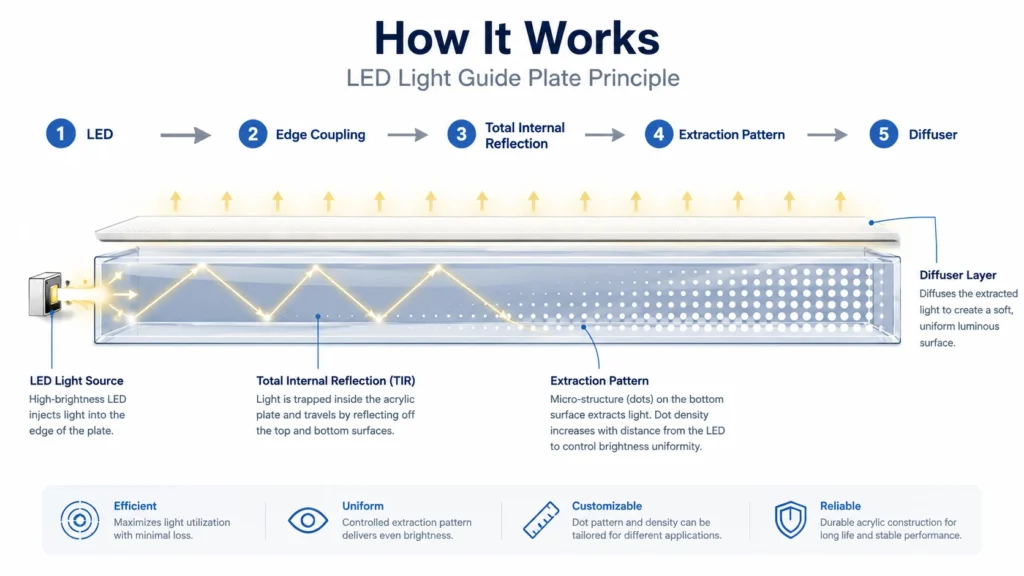
The operating principle can be divided into four main stages.
1. LEDs Introduce Light Through the Edge
LEDs are positioned along one or more edges of the light guide plate.
The LED output must be aligned with the plate edge so that as much light as possible enters the material. The quality of this optical coupling affects the efficiency and brightness of the finished assembly.
Important factors include:
- Distance between the LED and plate edge
- LED beam angle
- LED spacing
- Edge surface quality
- Mechanical alignment
- Gaps between components
Poor edge coupling may result in visible bright spots, dark areas, or reduced light efficiency.
2. Light Travels Inside the Plate
After entering the plate, light travels through the transparent material.
At many points, the light reaches the boundary between the plate and the surrounding air at an angle that causes it to reflect back into the material. This optical behavior is known as total internal reflection.
Total internal reflection allows light to continue travelling through the plate rather than immediately escaping through its surfaces.
Research on edge-lit light guide plates describes this internal transmission as a fundamental part of their operating principle.
3. Optical Patterns Extract the Light
If the plate had no extraction structures, much of the light would remain trapped inside the material and eventually leave through another edge.
To create surface illumination, a designed pattern is added to the plate. Depending on the manufacturing method, this pattern may include:
- Laser-created dots
- Engraved microstructures
- V-cut grooves
- Printed optical dots
- Molded surface structures
- Other customized optical patterns
When internally guided light reaches one of these structures, its direction changes. Part of the light no longer satisfies the conditions for total internal reflection and exits through the light-emitting surface.
The extraction pattern therefore controls where and how much light leaves the plate.
4. The Reflector and Diffuser Manage the Output
A light guide plate is normally used as part of a complete optical assembly rather than as an isolated component.
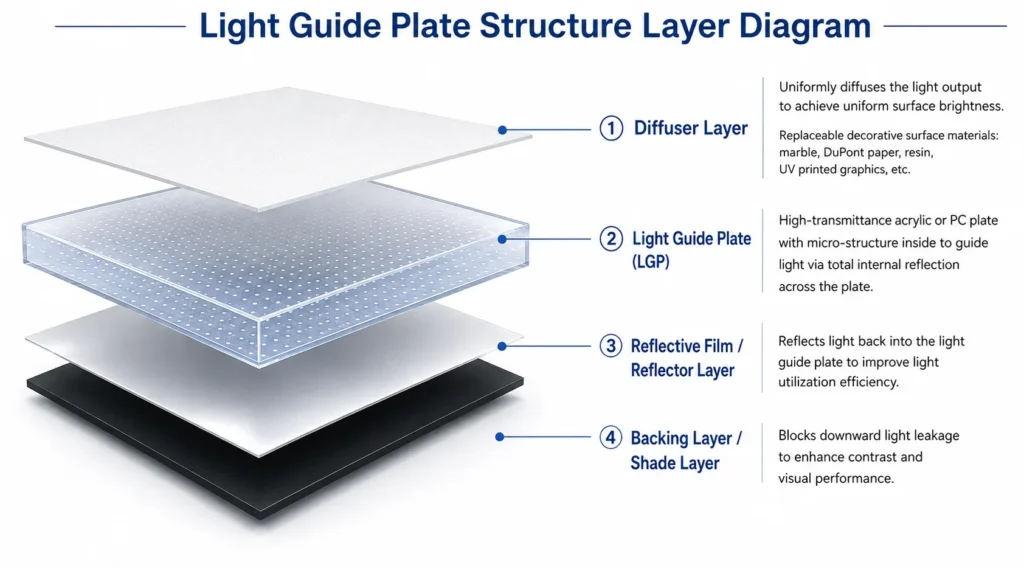
A typical assembly may contain:
| Component | Main function |
| LED source | Supplies light through one or more plate edges |
| Light guide plate | Guides and distributes light |
| Optical pattern | Extracts light at controlled positions |
| Reflective layer | Redirects backward light toward the output surface |
| Diffuser | Reduces visible dots and local brightness differences |
| Frame or housing | Maintains position, spacing, and structural stability |
The reflector is normally installed behind the plate to return downward-directed light toward the front.
A diffuser placed above the light guide plate helps blend the extracted light and reduce the visibility of individual optical dots, grooves, or LED hotspots.
Why Is the Optical Pattern Not Uniform?
In many light guide plate designs, the extraction pattern does not use the same density across the entire surface.
Areas close to the LEDs naturally receive more light. Areas farther away receive less light because energy is gradually extracted and lost as it travels through the plate.
To compensate for this difference, the optical structures may be:
- Smaller or less dense near the LED source
- Larger or more densely arranged farther from the LED source
- Adjusted around corners, edges, cut-outs, or irregular shapes
- Modified according to the number of illuminated sides
The exact relationship depends on the plate geometry, LED configuration, optical material, and target output.
Optical research has shown that the arrangement and density of microstructures have a direct effect on output uniformity.
This is why enlarging an existing pattern or applying the same dot layout to every project does not reliably produce the same lighting result.
Common Light Guide Plate Pattern Types
Different pattern-generation methods can be used depending on the application, production volume, dimensions, optical target, and project budget.
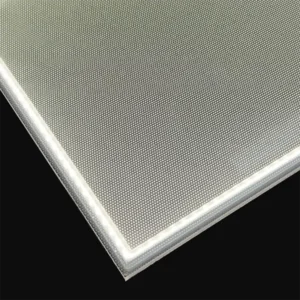
Laser-Dotted Light Guide Plates
Laser processing creates optical dots or microstructures on the plate surface.
The dot size, depth, shape, and distribution can be adjusted according to the optical design. Laser processing is commonly used for customized dimensions, prototypes, and production where flexible pattern control is required.
V-Cut Light Guide Plates
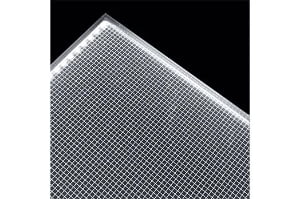
V-cut light guide plates use engraved lines or grooves to redirect internally guided light.
The spacing, depth, orientation, and geometry of the grooves influence the direction and distribution of the emitted light. This structure may be selected when directional extraction or a particular visual effect is required.
Printed-Dot Light Guide Plates
Printed patterns use optical or reflective ink to form extraction dots on the plate.
This method has been used extensively in backlight systems. Its suitability depends on production volume, pattern requirements, durability, tooling, and the required optical performance.
Molded Microstructure Light Guide Plates
For higher-volume applications, optical microstructures may be formed through molding or replication processes.
These methods may offer production consistency at scale but normally require greater initial development and tooling investment.
No single extraction method is suitable for every project. The correct choice depends on the required structure, quantity, size, optical performance, and manufacturing conditions.
What Factors Affect Light Guide Plate Performance?
A light guide plate should be evaluated as part of a complete optical and mechanical system.
Optical Material
Material clarity, refractive properties, surface quality, and internal impurities affect how efficiently light travels through the plate.
Scratches, dust, contamination, or material defects may become visible after illumination.
Plate Size and Thickness
The plate dimensions influence the distance that light must travel.
A structure that works for a small panel may not provide the same uniformity when directly enlarged. Large-format panels may require changes to the LED arrangement, plate thickness, pattern design, or number of illuminated edges.
LED Selection and Arrangement
Relevant LED parameters include:
- Luminous output
- Color temperature
- Color rendering requirements
- Beam angle
- LED pitch
- Electrical power
- Thermal management
- Bin consistency
The optical pattern should be developed around the actual LED source rather than treated as an independent component.
Edge Treatment and Coupling
The condition of the light-entry edge affects how much LED light enters the plate.
Cutting quality, polishing, surface finish, alignment, and assembly gaps can all influence coupling efficiency.
Extraction Pattern
The pattern determines the local extraction rate across the plate.
An unsuitable pattern may cause:
- Bright edges
- Dark central areas
- Visible LED hotspots
- Dot visibility
- Uneven corners
- Bright or dark bands
- Inconsistent output around openings
Reflective and Diffusion Materials
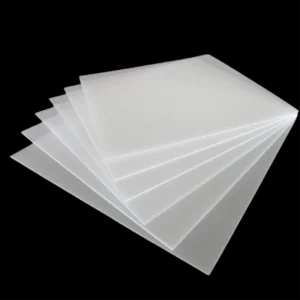
Reflective film, diffuser material, spacing, and surrounding surface colors all affect the final appearance.
Changing one optical layer after the pattern has been confirmed may alter brightness or uniformity.
Mechanical Assembly
Pressure, bending, adhesive placement, dust, frame tolerance, and component movement may influence the final lighting result.
For this reason, prototype evaluation should use a structure that is reasonably close to the intended production assembly.
What Are Light Guide Plates Used For?
Light guide plates are used where a relatively thin structure must distribute light across a wider surface.
Common application directions include:
Retail Displays
Light guide plates can be integrated into illuminated shelves, display cabinets, product stands, brand walls, and promotional fixtures.

Advertising Light Boxes
Edge-lit light guide plates can reduce the depth of certain light box structures while providing surface illumination behind printed graphics.
Signs and Graphic Displays
They can be used behind acrylic graphics, logos, directional signs, menu displays, and other illuminated visual elements.
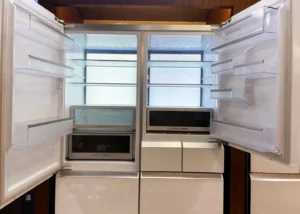
Appliances and Equipment
Custom light guide structures may be used in refrigerators, freezers, control panels, equipment displays, self-service devices, and other products that require integrated backlighting.
Interior and Decorative Applications
Light guide plates may be installed behind translucent decorative materials, furniture panels, wall elements, cabinets, mirrors, or other architectural features.
The suitability of a light guide plate depends on the required size, brightness, installation depth, viewing distance, environmental conditions, and visual effect.
Light Guide Plate vs Direct-Lit Backlighting
A light guide plate is mainly associated with an edge-lit structure, while a direct-lit structure places LEDs behind the illuminated surface.
| Factor | Edge-Lit Light Guide Plate | Direct-Lit Backlighting |
| LED position | Along one or more edges | Behind the illuminated surface |
| Structural depth | Can support thinner designs | Usually requires space between LEDs and diffuser |
| Light distribution | Controlled by the plate pattern | Controlled by LED layout and diffusion distance |
| Optical design focus | Edge coupling and extraction pattern | LED spacing and mixing distance |
| Typical challenge | Edge brightness and pattern uniformity | Hotspots and required installation depth |
| Customization | Pattern must match plate and LED design | Layout must match panel depth and LED arrangement |
Neither structure is universally better.
The correct solution depends on the project dimensions, available installation depth, brightness target, service requirements, cost, and expected visual result.
What Information Is Needed for a Custom Light Guide Plate?
Before developing or quoting a custom light guide plate, the following information is useful:
- Overall length and width
- Required plate thickness
- Shape, holes, cut-outs, or curved edges
- Light-entry side or sides
- LED type, spacing, color temperature, and power
- Target brightness and uniformity
- Single-sided or double-sided light emission
- Reflector and diffuser structure
- Installation environment
- Expected order quantity
- Technical drawing or assembly drawing
- Existing sample or reference effect
Providing only the external dimensions is usually not enough for an accurate optical evaluation.
The plate, LEDs, optical films, mechanical housing, and installation structure should be considered together.
Frequently Asked Questions
Does a light guide plate produce light?
No. A light guide plate is a passive optical component. It distributes light supplied by LEDs or another external light source.
Is a light guide plate the same as an acrylic sheet?
No. Although many light guide plates use PMMA acrylic as the base material, a functional light guide plate includes a designed optical extraction pattern. A standard clear acrylic sheet does not automatically provide controlled surface illumination.
Why are there dots or lines on a light guide plate?
The dots, lines, grooves, or microstructures redirect internally guided light out of the plate. Their distribution is designed to control brightness across the illuminated surface.
Why are some areas brighter than others?
Uneven brightness may be caused by the optical pattern, LED spacing, edge coupling, material quality, reflector, diffuser, assembly tolerance, or a mismatch between the prototype structure and the final installation.
Can a light guide plate be made in a custom shape?
Light guide plates can be developed in different sizes and shapes, including structures with holes, cut-outs, or non-rectangular outlines. However, changes in shape affect light propagation and may require a new optical pattern.
Can one light guide plate emit light from both sides?
A light guide plate can be designed for single-sided or double-sided output, but the extraction pattern, reflector, diffuser, LEDs, and surrounding structure must be developed for the intended direction of emission.
Conclusion
A light guide plate converts light from edge-mounted LEDs into broader surface illumination by combining internal light transmission with a controlled extraction pattern.
Its performance does not depend on the plate alone. The LED source, optical pattern, reflector, diffuser, dimensions, materials, and mechanical assembly all influence the final brightness and uniformity.
For a custom project, the first step is to define the complete lighting structure rather than selecting the plate only by size.
Planning a custom light guide plate project?
Send your drawing, target dimensions, LED information, installation structure, and required lighting effect for an initial technical evaluation.